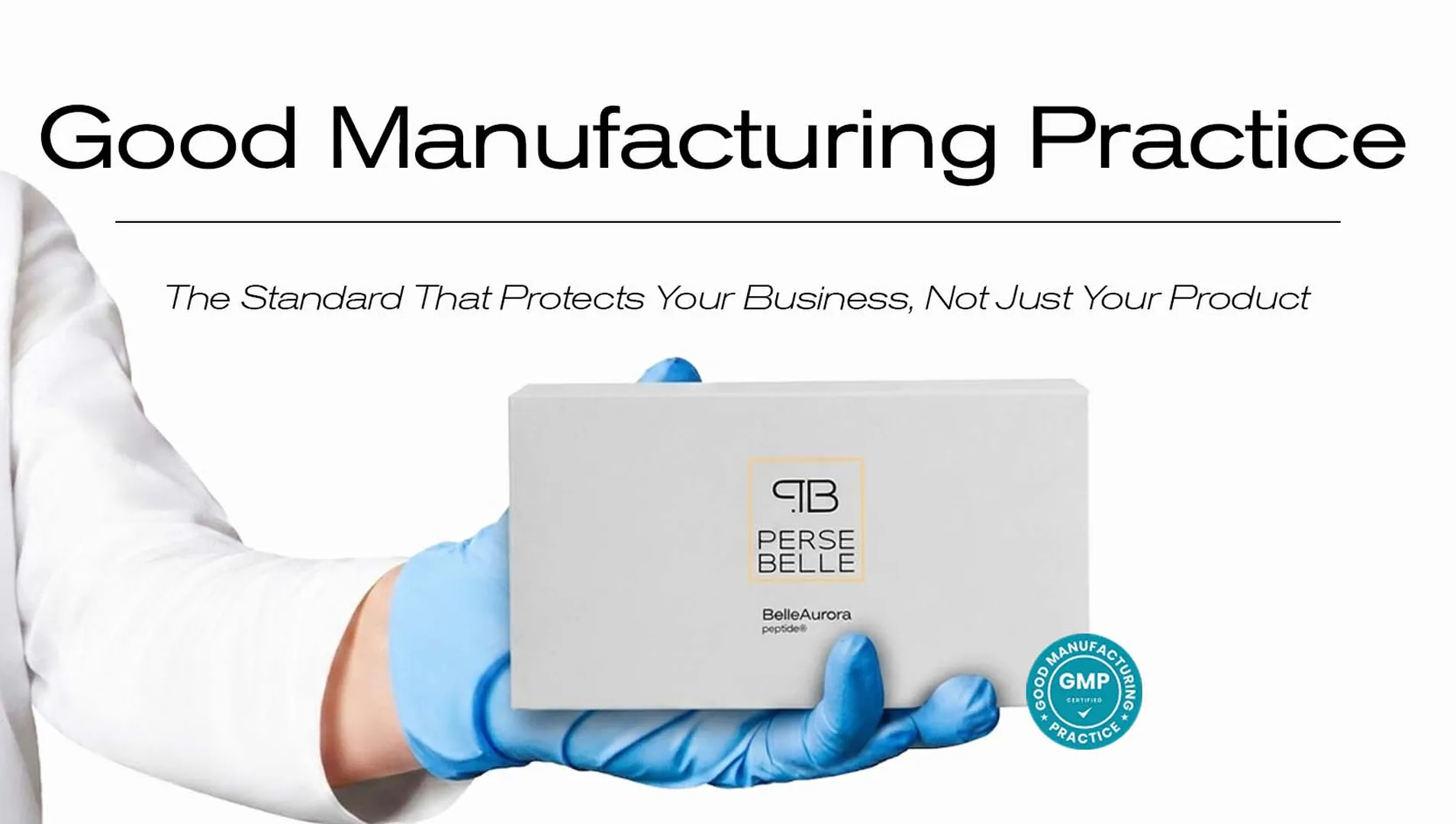
The professional aesthetics market is growing fast. But fast-growing markets attract fast-moving brands — and not all of them are built on the same foundation. In a segment where sterile formulations bypass the skin’s natural barrier entirely and enter living tissue, the question of manufacturing standard is not a compliance detail. It is the central question.
GMP certification — Good Manufacturing Practice, the pharmaceutical industry’s production standard — has become the dividing line between brands that can defend their science and brands that cannot. At Persebelle, that line is where we start.
Why Cosmetic Standards Are Not Enough for Sterile Bioactive Solutions
ISO 22716 is the quality standard that governs the majority of cosmetic manufacturing globally. It is a serious standard — for topical products. But Sterile Bioactive Solutions for professional use are not topical products.
When a formulation is applied to the skin’s surface, the skin itself acts as the first line of defense against contamination and instability. When that same formulation is delivered beneath the skin’s surface, there is no barrier left. Endotoxins, microbial contamination, and molecular degradation that a healthy stratum corneum would block now have direct access to vascular and lymphatic tissue.
This is the gap that GMP certification closes. Pharmaceutical-grade manufacturing controls — sterile environments, validated processes, batch-level traceability, documented endotoxin testing — exist precisely because some formulations carry a risk profile that cosmetic standards were never designed to manage.
Choosing GMP for a sterile bioactive formulation is not a premium option. It is the correct answer to the question of what the product actually does inside the body.
What GMP Actually Controls — and Why It Matters for Bioactive Stability
Peptides and exosomes are among the most scientifically promising active ingredients in modern aesthetic medicine. They are also among the most structurally sensitive. Their biological activity depends on molecular integrity — and that integrity is fragile under conditions that GMP is specifically designed to prevent.
Contamination and inflammatory response
In non-GMP manufacturing environments, invisible particulate matter and endotoxin residues can be introduced into formulations without detection at a cosmetic quality-control level. When a formulation is applied at a sub-epidermal level, these contaminants are a direct trigger for inflammatory response — one that is frequently misattributed to patient sensitivity rather than production failure. GMP-certified facilities operate under environmental monitoring protocols that eliminate this variable.
Cross-contamination in multi-product facilities
Facilities producing multiple formulations face a specific risk: trace carry-over from one batch to another. For high-potency ingredients like exosomes, even sub-detectable concentrations of foreign biological material can alter how the treatment performs. Persebelle’s GMP protocols include dedicated equipment allocation and validated cleaning procedures that provide documented evidence of separation between production runs — not just procedural assurance.
Molecular degradation
Peptide oxidation and exosome membrane destabilization are not hypothetical risks. They occur when temperature excursions, light exposure, or pH variation are inadequately controlled during production. GMP requires validated environmental parameters with continuous monitoring and documented deviation management. The result is a formulation that maintains its declared activity from the point of manufacture to the point of treatment.
GMP as a Regulatory Instrument for International Distribution
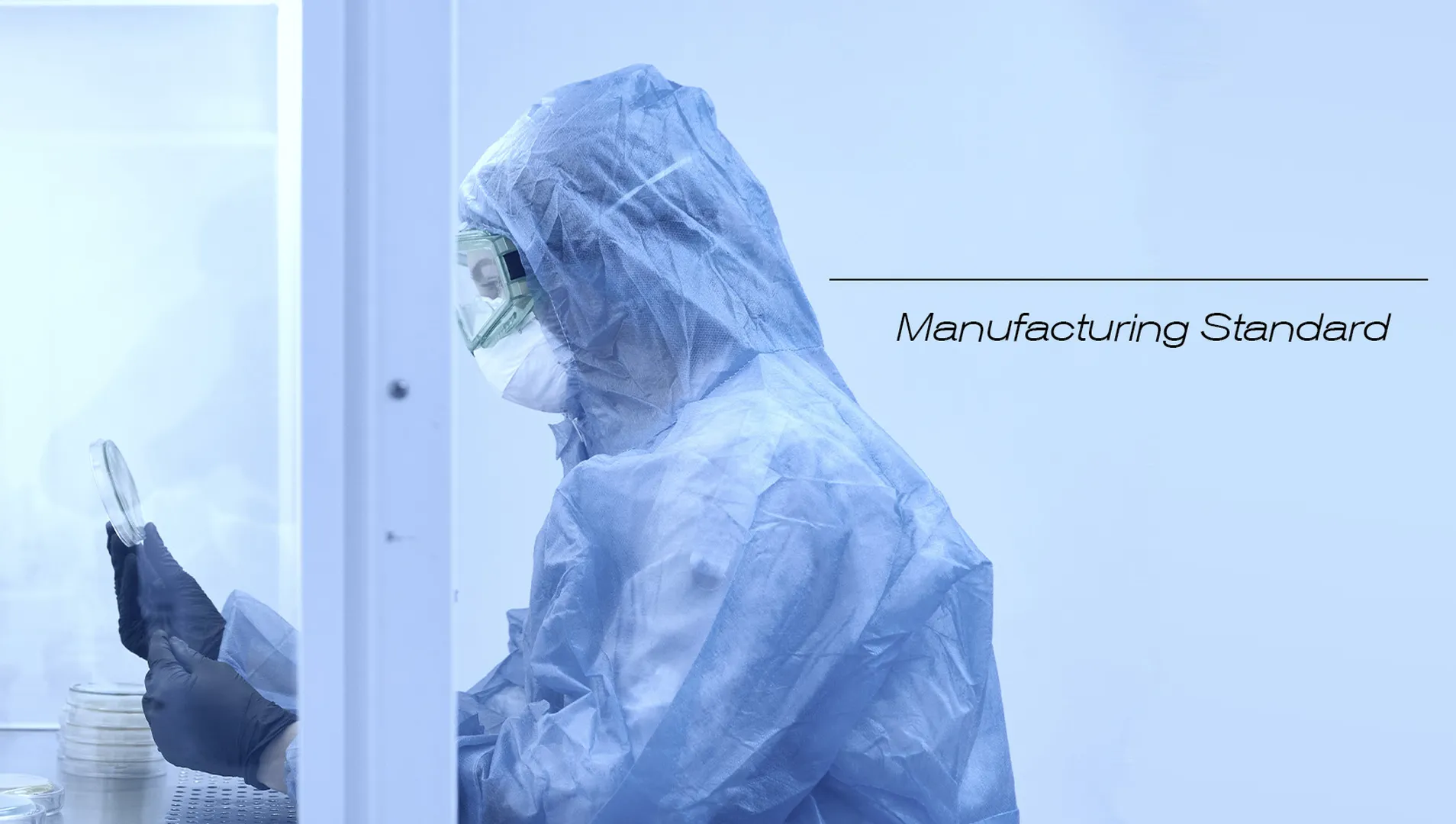
For distributors building or expanding a portfolio in regulated markets, GMP certification is not a marketing asset — it is an operational prerequisite.
Health authorities across key markets for aesthetic medicine — including the SFDA in Saudi Arabia, the MOH in the UAE, and equivalent bodies across the GCC and Southeast Asia — require pharmaceutical-grade manufacturing documentation as a baseline condition for the registration of sterile professional formulations. Without it, the regulatory process does not begin.
What Persebelle’s GMP certification provides in practice is a documentation package that meets the evidentiary requirements of these processes: batch records, environmental monitoring data, stability studies, and chain-of-custody traceability. The administrative burden of registration is substantially lower when that infrastructure already exists.
This matters for distributors evaluating which brands to build a portfolio around. A supplier’s regulatory readiness directly determines your time-to-market and your exposure to compliance risk. A brand that cannot provide the documentation is a liability, not a partner.
The Risk Management Argument for Medical Directors
For clinical directors and aesthetic practitioners, the choice of product is inseparable from the choice of professional liability.
A GMP-certified product provides something that cosmetic-grade alternatives cannot: an auditable record of manufacturing decisions. In the event of an adverse reaction — regardless of cause — the ability to demonstrate that the product was manufactured under documented pharmaceutical-grade controls is the most substantive defense available to a practitioner.
This is not a theoretical concern. As aesthetic medicine matures and as patient awareness of product standards grows, the expectation that professionals can verify and explain what they administer is becoming a baseline of clinical credibility, not an exceptional differentiator.
Persebelle’s manufacturing standard does not eliminate clinical risk. No manufacturer can. What it does is remove manufacturing quality as a variable from the risk equation — which is the most that responsible production can offer, and more than most suppliers currently provide.
Manufacturing Standard as a Formulation Decision
Not all regulatory frameworks for aesthetic medicine are equivalent — and not all of them are designed with formulation integrity as the primary concern. Some classification-based pathways impose compositional restrictions that, in practice, require reducing or removing high-potency bioactive ingredients in order to achieve compliance. The result is a product that clears a regulatory category but delivers less science.
Persebelle’s position is that the formulation comes first. Our manufacturing standard — GMP-certified under ISO 13485 for medical device production — was chosen because it provides the highest level of pharmaceutical-grade production control while preserving the full bioactive profile our formulations are designed around. We do not accept trade-offs that compromise what reaches the clinic.
For distributors, this means working with a supplier whose documentation is built on a robust, internationally recognized manufacturing framework — one that supports regulatory conversations in key markets across the GCC, Southeast Asia, and beyond. Our team works directly with distribution partners to navigate the specific requirements of each market with full transparency.
Looking to expand into markets that demand pharmaceutical-grade documentation?
Our team works directly with distributors on regulatory positioning, documentation packages, and market entry strategy. The conversation starts at persebelle.com.